

The Self-Respect Starter Pack
Standards, boundaries, and the quiet art of backing yourself

Something weird happens when people talk about self-respect. It either turns into a Pinterest aesthetic (iced coffee, clean sheets, girlboss quotes) or a moral lecture about how you “should know your worth.” Neither of those formats actually help you when you’re sitting there wondering why you keep tolerating jobs, conversations, or situations that make your soul itch.
EXCLUSIVE GLWCLUB DOWNLOAD INSIDE!
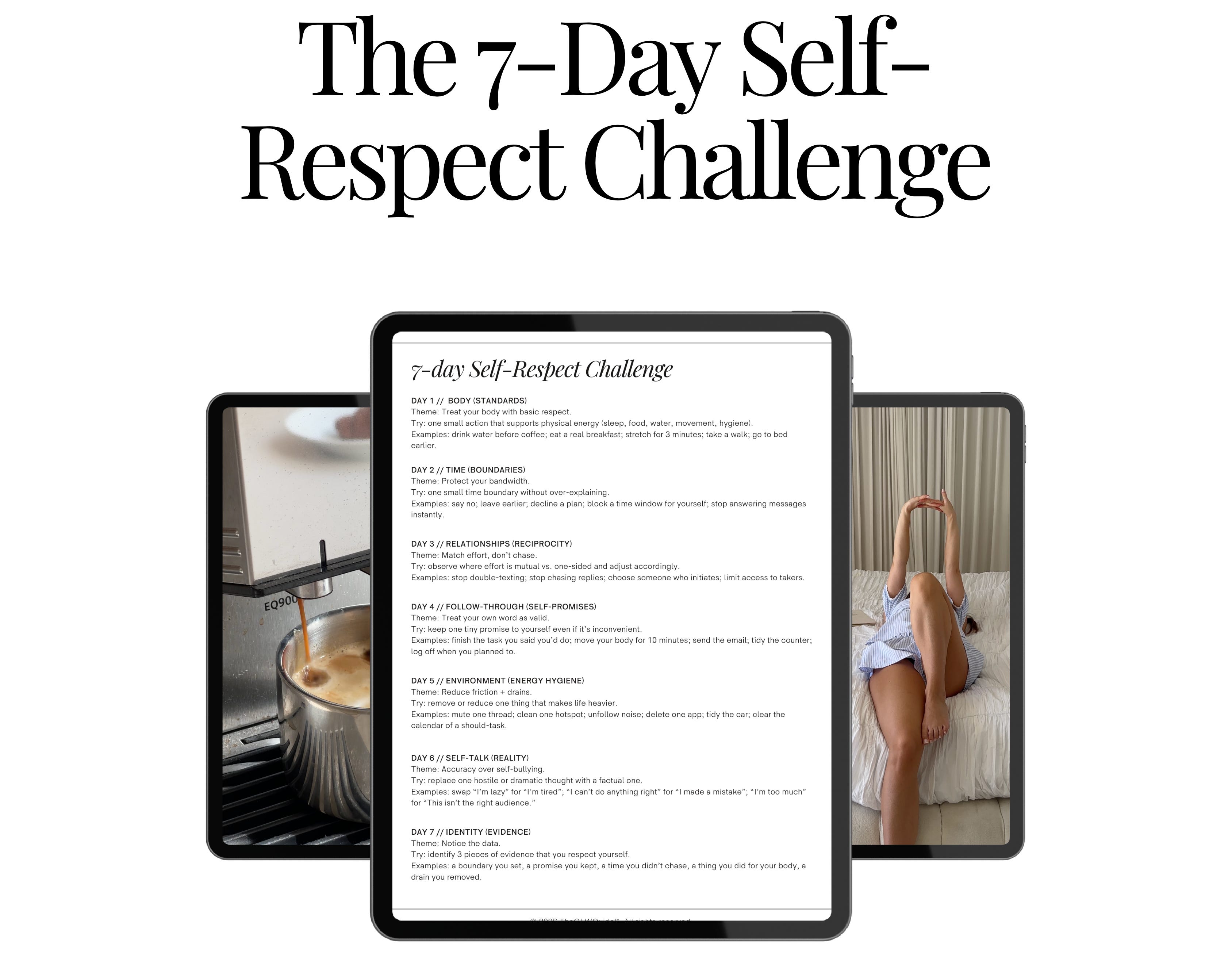
Real self-respect isn’t about manicured rituals or dramatic ultimatums. It’s about how you behave when no one is clapping. It shows up in standards, boundaries, and follow-through. It’s how you allocate your time, how you let people treat you, and whether you keep the promises you make to yourself when it’s inconvenient. That’s not glamorous; that’s governance.
Now, if self-confidence is how you feel about yourself, then self-respect is how you operate. And most people don’t struggle because they “don’t know their worth”, but because they don’t have a framework for acting like they do. This post fixes that. No slogans, no moral superiority, no journaling about your inner goddess. Just a simple structure you can actually use in real life! Let’s dive in:
Self-respect gets talked about like it’s a feeling you magically wake up with after a good haircut and a Sunday reset. In reality, it’s mostly behavior. People with self-respect don’t necessarily walk around buzzing with confidence, they just make choices that don’t betray themselves. It’s standards over vibes, follow-through over motivation, and alignment over approval. You can like yourself in theory and still abandon yourself in practice; self-respect closes that gap.
At its core, self-respect is an identity, choices, & outcomes loop. When you quietly identify as someone who respects herself, your choices start changing: you don’t chase, you don’t explain yourself to people who aren’t listening, you don’t abandon your needs for crumbs. Those choices create different outcomes (less chaos, less resentment, better energy), which then reinforce the identity. There’s no manifestation journal required here, it’s actually evidence-based psychology.
This is why self-respect is built, not declared. You don’t get it because you made a vision board or recited affirmations; you get it because you treat yourself like someone worth backing. That’s the part most advice misses: self-respect isn’t a mood, it’s a governance system. And like any system, you develop it through small, boring, unglamorous decisions that eventually change everything.
Self-respect can feel abstract until you break it into behaviors you can actually see. The easiest way to understand it is through three pillars: standards, boundaries, and follow-through. Together, they form the operating system for how you move through the world.
Standards are about what you allow into your orbit: work, relationships, habits, environments. They’re not about being snobby or high-maintenance; they’re about having a baseline for how you expect to live. Someone with standards won’t keep entertaining people who breadcrumb them, and they won’t work for places that treat burnout like a personality trait. Standards quietly filter your life so you don’t keep negotiating for scraps.
Boundaries are the flip side, they’re what you refuse. Boundaries aren’t walls, ultimatums, or dramatic exits; they’re instructions for how to interact with you. A boundary can sound like “I don’t stay up late texting when I have work tomorrow,” or “I don’t explain my ‘no.’” It’s less about controlling other people and more about controlling your own participation. If standards set the criteria, boundaries enforce them.
Follow-through is where most people break the loop. It’s one thing to say you have standards and boundaries, and another thing to actually act on them when they cost you comfort, dopamine, or approval. Follow-through is leaving the date when his behavior gets weird instead of waiting it out, or doing the workout you planned because you said you would, not because you’re “motivated.” It’s the quiet proof that you take yourself seriously, even when no one’s watching.
Self-respect is really just a pattern. Here are the small, practical behaviors that can change how you feel about yourself because they change how you treat yourself.

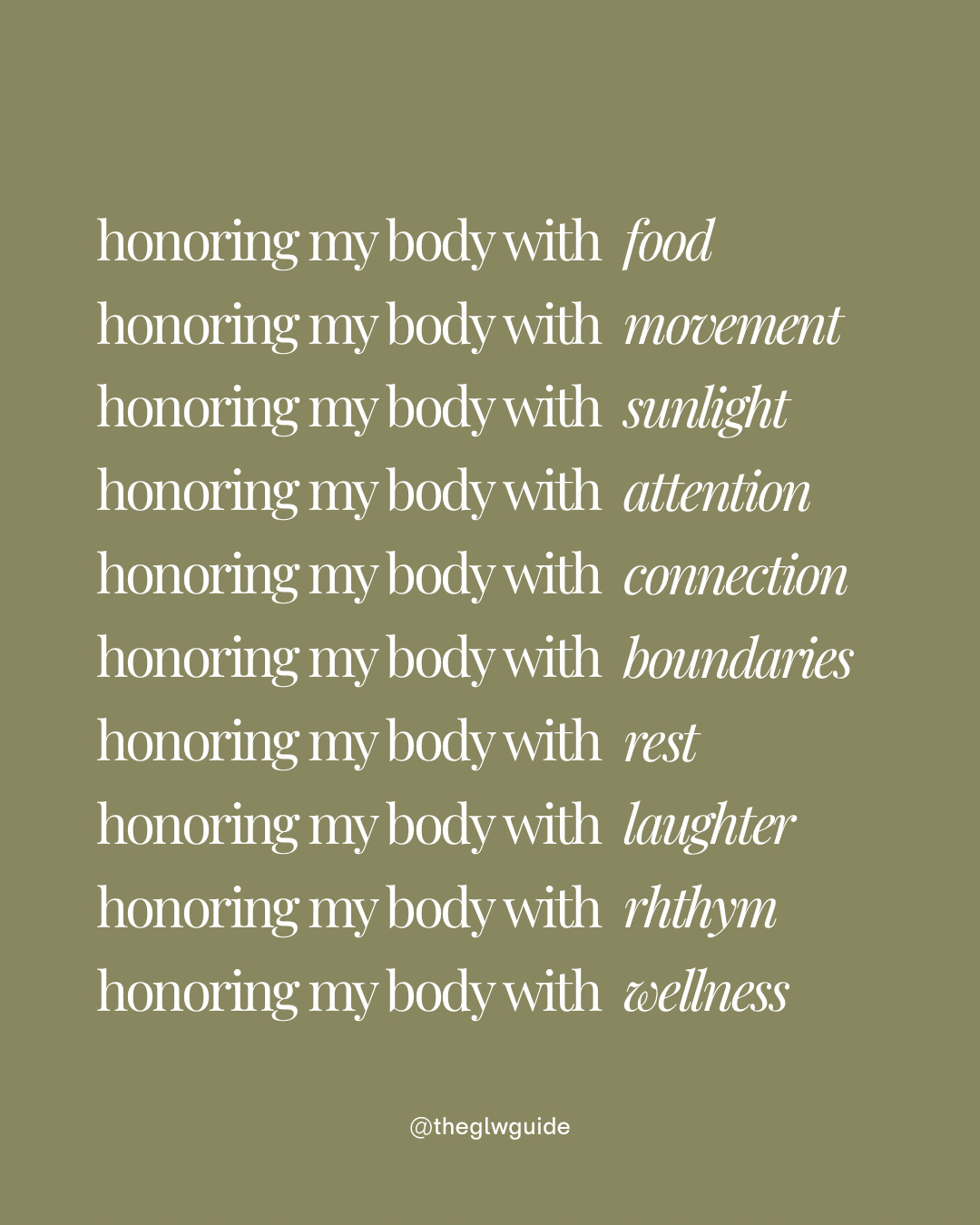
A) In Your Body
Self-respect in the body isn’t about optimization or being “that girl.” It’s sleep, food, and movement that keep you functioning instead of punishing yourself for being human.
Looks like:
Eating meals before you get shaky or feral.
Drinking water and electrolytes, not just iced coffee.
Going to bed when you’re tired instead of doom scrolling for two hours.
Stretching because your hips hurt, not because you’re trying to be a yogi.
Taking rest days without making it a personality crisis.
Lifting weights to get strong, not to micromanage aesthetics.
Dressing for the weather instead of suffering for the fit.
Taking supplements you actually need, not whatever TikTok is pushing.
Booking the dentist before something hurts.
Stopping when you’re full instead of “finishing your plate to be polite.”
Taking sick days without apologizing to the entire office.
Getting fresh air when your brain feels like dial-up internet.
Eating real breakfast instead of just vibes and caffeine.
B) In Your Time